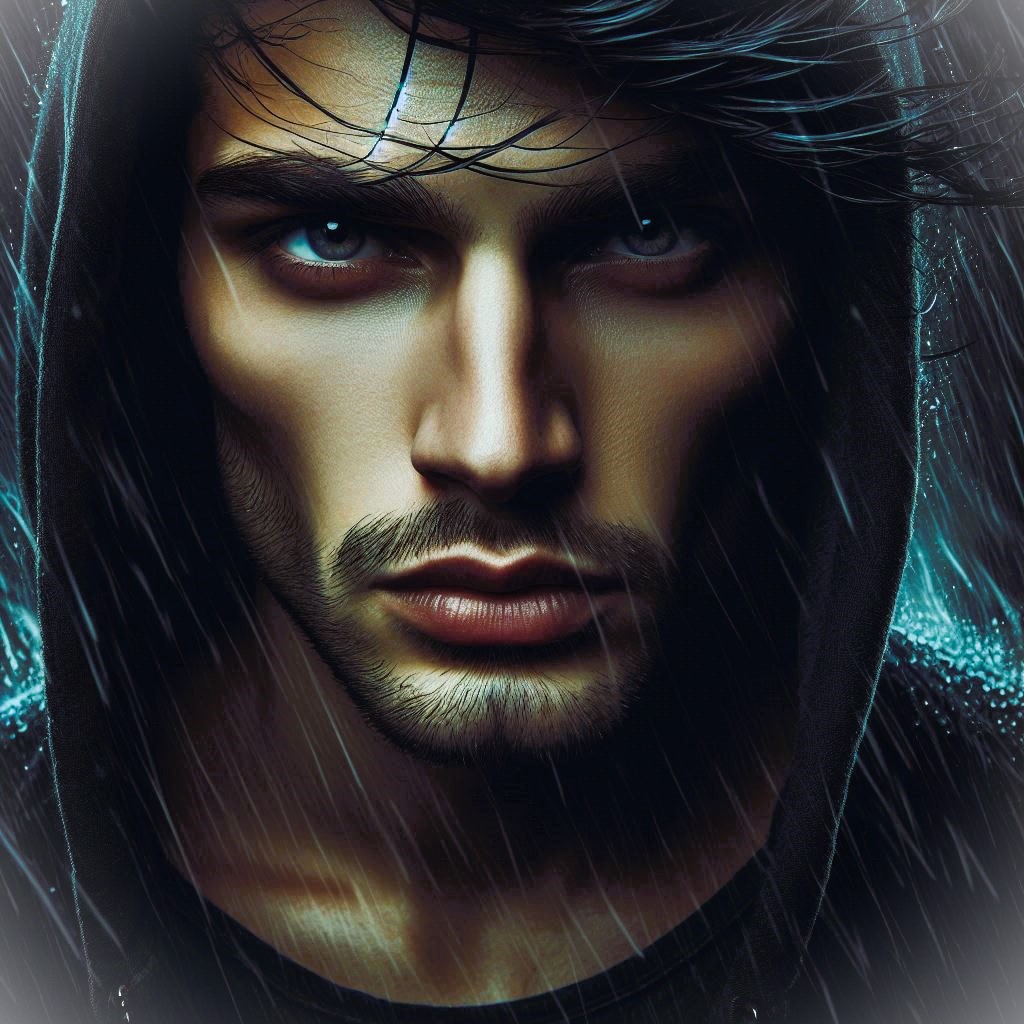
Levi’s footsteps echoed through the dimly lit alleyways of the city. The rain fell in a relentless drizzle, washing away the grime and despair that clung to the cracked pavement. His face was hidden beneath a hood, eyes narrowed against the biting wind. He had become something else—a creature of shadows and vengeance.
It hadn’t always been this way. Levi had once been an idealist, believing in the inherent goodness of people. He’d worked odd jobs for different races—humans, aliens, and hybrids alike. His heart had swelled with hope as he bridged cultural gaps, believing that unity was possible.
But then they came—the ones he’d trusted the most. The ones who had shared secrets with him, laughed over late-night drinks, and promised loyalty. They betrayed him, not with a knife in the back, but with something far more insidious: the murder of his beloved cat, Whiskers.
Levi’s grief turned to rage. He hunted them down, one by one. Their screams echoed in the abandoned warehouses, their pleas falling on deaf ears. He tortured them, just as they had tortured him—day after day. The city whispered about the dark hero who emerged from the shadows, a phantom with a purpose.
His name spread like wildfire: “The Cat’s Avenger.” Levi wore a mask—a jagged feline silhouette that struck fear into the hearts of criminals. He became a legend, a myth whispered in hushed tones. The corrupt politicians, the drug lords, the human traffickers—they all feared him.
Levi’s methods were brutal. He didn’t believe in redemption; he believed in retribution. His weapons were crude—a crowbar, a switchblade, and a heart filled with vengeance. He prowled the city’s underbelly, seeking justice for the innocent and punishment for the guilty.
The rain intensified, plastering Levi’s hair to his forehead. He stood on the rooftop, overlooking the sprawling metropolis. The city lights blurred into a neon haze, and he wondered if he’d become as twisted as the criminals he hunted. But he couldn’t stop—not when Whiskers’ ghost haunted his dreams.
His enemies had learned to fear the darkness. They whispered stories of the Cat’s Avenger, of a man who moved silently, leaving broken bodies in his wake. Some said he was immortal, a specter seeking revenge for all the betrayed souls.
Levi’s final target was the ringleader—the one who had orchestrated Whiskers’ death. He tracked the man to an abandoned theater, its crumbling walls a testament to forgotten dreams. The ringleader awaited him, arrogance etched into his scarred face.
“You think you’re a hero?” the ringleader sneered. “You’re just a monster.”
Levi didn’t respond. He lunged, blade flashing in the dim light. The ringleader fought back, but Levi was faster, fueled by grief and fury. Their struggle echoed through the theater, a symphony of violence.
When it was over, Levi stood amidst the fallen, blood staining his hands. The ringleader’s lifeless eyes stared up at him. Whiskers’ ghost seemed to purr in approval.
Levi stepped out of the theater, rain washing away the blood. The city would remember him—the dark hero who would not be messed with. But deep down, he wondered if he’d become the monster he despised.
As dawn approached, he disappeared into the shadows once more, leaving behind a legacy of vengeance and broken souls. The rain continued to fall, cleansing the streets, but it could never wash away the darkness that now consumed Levi’s heart.
And so, the Cat’s Avenger became a legend—a cautionary tale for those who dared to betray trust. Levi’s name echoed through the city, whispered by those who feared the night.
Comments
Post a Comment